Sunt vitae dolore la
Lorem ipsum dolar sit amet minim lorerm ipsum dolar sit amet minimlorerm ipsum dolar sit amet minim. Lorem ipsum dolar sit amet minim lorerm ipsum dolar sit amet minimlorerm ipsum dolar sit amet minim.

Anim qui modi error .
Lorem ipsum dolar sit amet minim lorerm ipsum dolar sit amet minimlorerm ipsum dolar sit amet minim. Lorem ipsum dolar sit amet minim lorerm ipsum dolar sit amet minimlorerm ipsum dolar sit amet minim.

Anim qui modi error .

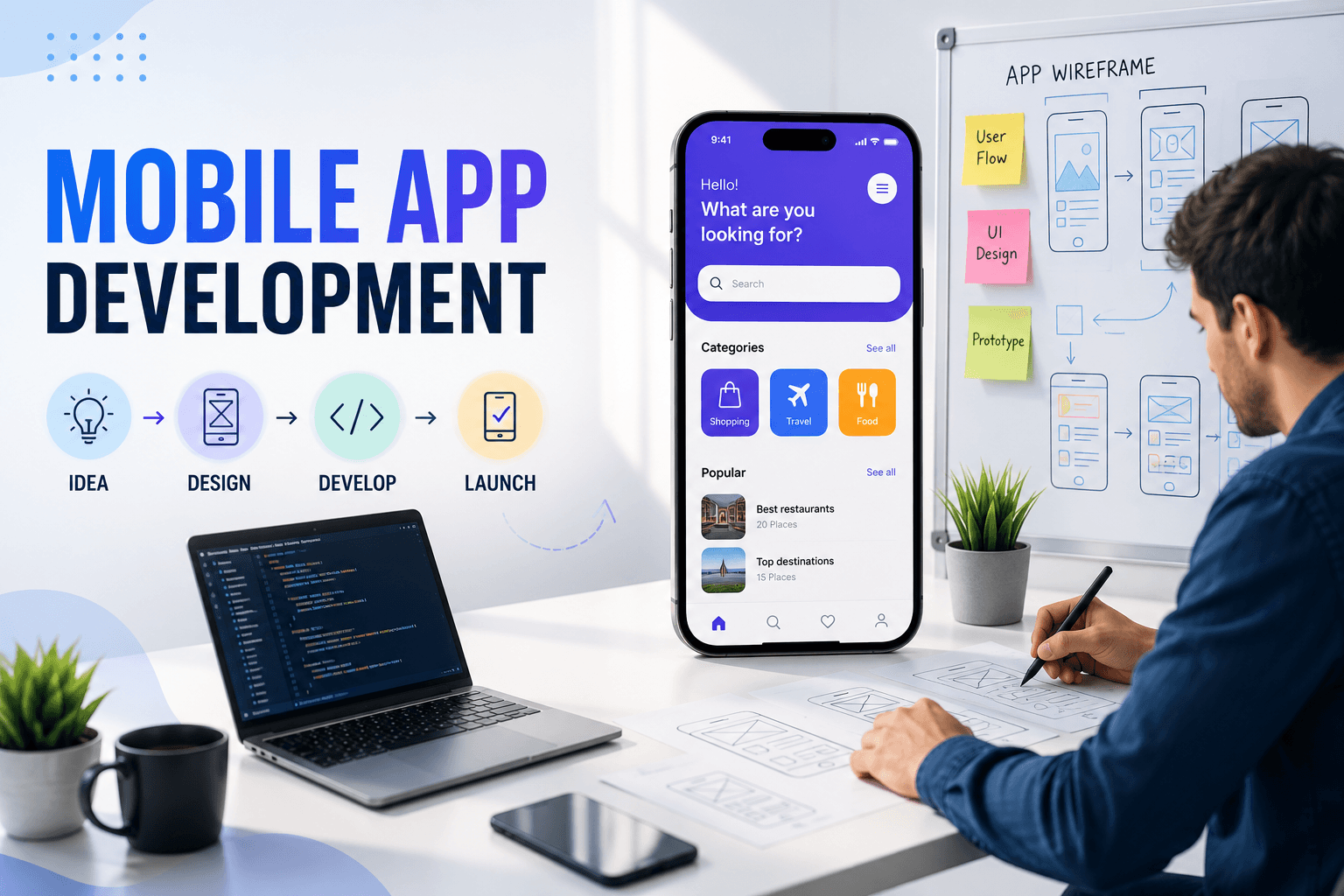
One of the biggest misconceptions in the startup world is that building a mobile application requires a year of development and a massive budget. In reality, many successful products started with a focused Minimum Viable Product (MVP) that was built in less than 90 days. The goal of an MVP is not to create the final version of your product—it's to launch a working solution that validates your idea, attracts early users, and provides valuable market feedback.

Many AI projects become unnecessarily expensive, not because the technology is difficult, but because organisations begin development without a clear strategy. One of the most common mistakes is trying to solve too many problems at once. Companies often enter an AI project with a long list of desired features, only to discover that development timelines and budgets quickly spiral out of control. Another frequent issue is poor data readiness. Businesses may assume they have enough data to train an AI system, only to realise later that the information is incomplete, inconsistent, or spread across multiple systems. It's also common for organisations to focus on technology before identifying the business problem they want to solve. The most successful AI initiatives start with a clear objective, whether that's reducing customer support costs, improving forecasting accuracy, or increasing operational efficiency. A focused scope and realistic roadmap can save thousands of dollars and significantly reduce project risk.

Every successful product starts with an idea. The challenge is turning that idea into something real without spending months of development time and exhausting your budget before you've even validated demand. That's where an MVP comes in. MVP stands for Minimum Viable Product. It's one of the most widely used approaches in modern product development because it helps startups test assumptions, gather feedback, and reduce risk before making larger investments. Yet many founders misunderstand what an MVP actually is. Some assume it's a low-quality version of a product. Others try to pack every feature into the first release and end up building something far bigger than necessary. The reality is much simpler: an MVP is the smallest version of your product that delivers meaningful value to users while helping you learn whether your idea solves a real problem. In this guide, we'll explore what an MVP is, why startups build them, how the development process works, and how to avoid common mistakes that can delay your launch.


Frequently Asked Questions