
Why 90 Days Is Enough to Build a Successful MVP

One of the biggest misconceptions in the startup world is that building a mobile application requires a year of development and a massive budget. In reality, many successful products started with a focused Minimum Viable Product (MVP) that was built in less than 90 days. The goal of an MVP is not to create the final version of your product—it's to launch a working solution that validates your idea, attracts early users, and provides valuable market feedback.
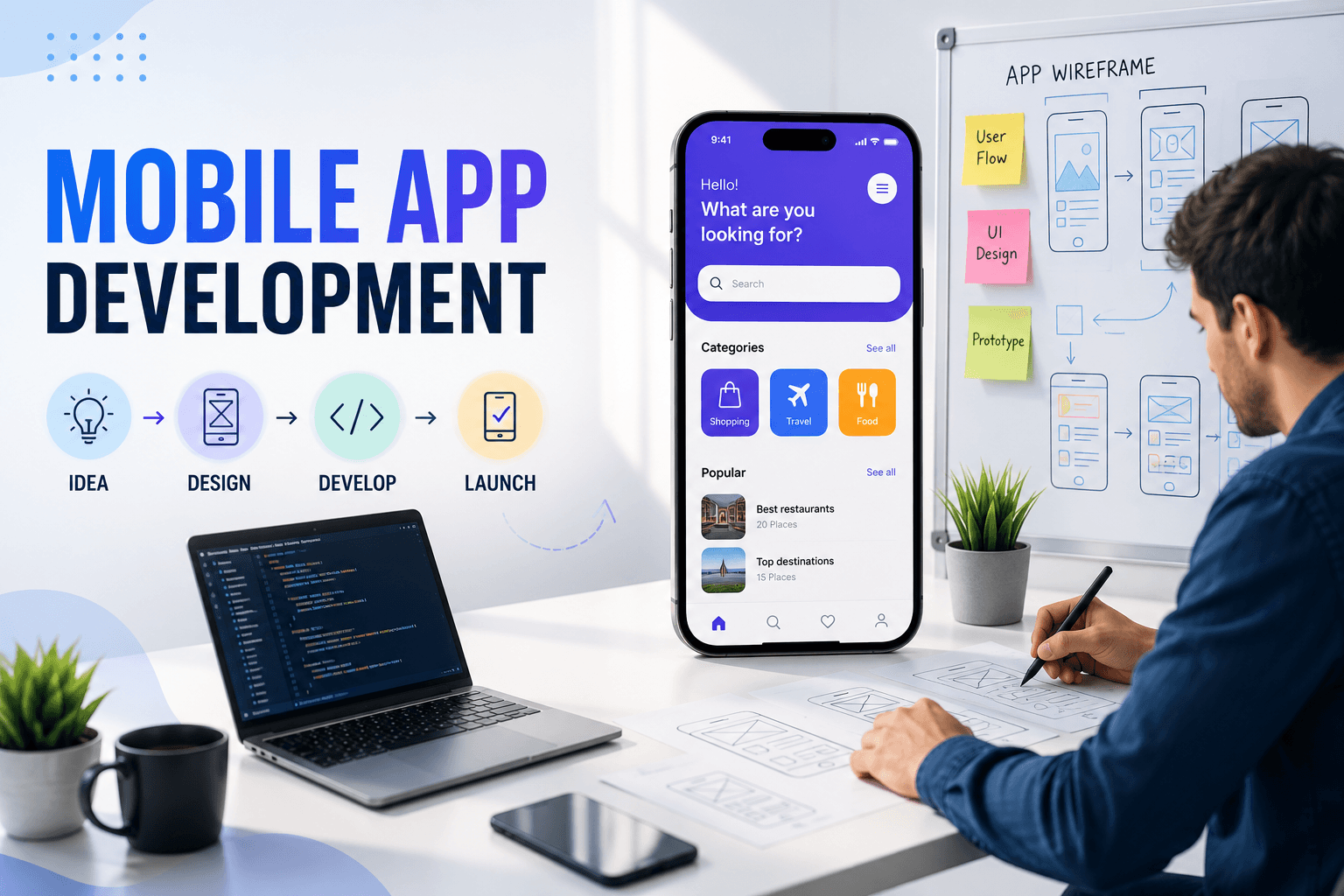
Why 90 Days Is the Ideal Timeline
A 90-day development cycle creates focus and eliminates unnecessary complexity.
Rather than spending months debating features, teams prioritize what truly matters.
A typical roadmap looks like this:
Days 1–15: Discovery and Planning
Define business goals
Research competitors
Identify target users
Create product requirements
Prioritize MVP features
Days 16–30: UX/UI Design
User flow mapping
Wireframes
Interactive prototypes
Visual design
Design approval
Days 31–75: Development
Backend architecture
Mobile application development
API integrations
Authentication
Core business functionality
Days 76–90: Testing and Launch Preparation
Quality assurance
Bug fixing
Performance optimization
App Store and Google Play preparation
Production deployment
At the end of 90 days, businesses have a real product in users' hands—not just a prototype.
The Biggest Mistake Startups Make
Many founders try to build every feature they can imagine before launching.
They want:
Advanced analytics
Multiple user roles
Complex dashboards
AI integrations
Social features
Custom admin panels
Dozens of settings and options
The result is often a delayed launch, increased costs, and uncertainty about whether customers actually want the product.
Successful startups launch early and improve continuously.
What Can Be Built in 90 Days?
A well-planned MVP can include:
User registration and authentication
User profiles
Core product functionality
Payment integration
Push notifications
Admin dashboard
Basic analytics
Third-party API integrations
For many startups, this is more than enough to validate the business model and begin acquiring customers.
Why Launching Faster Creates a Competitive Advantage
Every month spent in development without customer feedback increases business risk.
Launching within 90 days allows companies to:
Test market demand
Collect user feedback
Attract investors
Generate revenue sooner
Improve the product with real data
Building fast does not mean sacrificing quality—it means focusing on what creates the highest value.
The MVP Is the Beginning, Not the Finish Line
The first version of your app should not be perfect.
It should be useful.
Many of today's most successful digital products started with a very limited feature set and evolved over time through continuous iteration.
An MVP is designed to learn, adapt, and grow alongside your users.
Final Thoughts
You don't need a year to build a successful mobile application.
With a clear strategy, focused scope, and experienced development team, 90 days is often enough to design, develop, test, and launch a high-quality MVP.
The companies that succeed are not always the ones that build the most features. They are the ones that get to market first, learn from their users, and improve their products based on real-world feedback.
A successful app doesn't start as a complete product.
It starts as the right product.